.png)
Home and Community Services

Feels Like Home Support Services is an NDIS provider built on trust, family values, companionship, and clinical nursing expertise. This unique combination of medical knowledge and a warm, family-focused environment sets us apart from many other NDIS providers in Brisbane, Logan, Ipswich and surrounding areas. Our participants receive high-quality, genuinely person-centred care that you can rely on, whether the support is for you or a loved one.
Our Clinical Director, Chloe (Registered Nurse), personally oversees your intake and staff matching. She will speak with you about your goals, support needs, cultural preferences, and what a “good day” looks like for you. Based on this, Chloe carefully matches you with the most suitable Support Worker and personally introduces you, so you feel safe, heard, and in control. You always have a say in your care.
Our experienced NDIS Support Workers specialise in a wide range of disabilities, including but not limited to:
-
Physical disabilities
-
Complex disabilities and high-intensity support
-
Autism (ASD) and intellectual disabilities
-
Challenging behaviours, including BSP and PBSP implementation
-
Mental health conditions
-
Invisible disabilities
We provide a variety of NDIS support services, from everyday in-home care and community access through to more complex, high-intensity and clinical support. Explore the sections below to learn more about how Feels Like Home Support Services can support you or your loved one to live more independently, confidently, and connected to your community.
Assistance with Personal and Self-Care

We understand that support with everyday tasks is essential for your physical, emotional, and mental well-being. Our team can assist with your daily personal care and self-care routines, helping to make life safer, easier, and more comfortable at home and in the community.
We can support you with:
-
Personal hygiene and grooming – bathing or showering, dressing, toileting, oral care, hair care, shaving
-
Daily living and household tasks – light cleaning, laundry, shopping, following household routines
-
Meal preparation and eating – preparing meals and providing assistance during mealtimes
-
Community access – appointments, shopping, social activities, and outings
-
Medication and continence support – medication prompting as per your care plan, continence and waste management
Your mental and emotional wellness is always a priority. Our professionals can support you with managing stress, talking through decisions, and solving day-to-day problems, so you feel heard, respected, and supported.
ASD & Autism

Autism (ASD) and intellectual disabilities can affect how a person communicates, learns, and experiences the world around them. At Feels Like Home Support Services, our Support Workers provide calm, consistent and person-centred support to help you feel safe, understood, and in control of your day-to-day life.
We take the time to learn your routines, preferences, communication style, and sensory needs, so support feels predictable and “like home”, not overwhelming or rushed.
We can support you with:
-
Daily living tasks such as personal care, showering, dressing, and meal preparation
-
Building independence with household tasks like cleaning, laundry, and simple cooking
-
Communication support, including using simple language, visual aids, or assistive technology
-
Managing emotions and behaviours, following behaviour support plans and using de-escalation strategies
-
Developing social skills and confidence in new or busy environments
-
Attending appointments, school, work, day programs, and community activities with one-on-one or two-on-one support
All support for people with autism and intellectual disabilities is tailored to your goals, preferences, and NDIS plan, helping you build independence, improve emotional regulation, and participate more confidently at home and in the community.
Challenging Behaviours

Challenging behaviours are complex, often unpredictable actions that can significantly affect a person’s learning, development, safety, and relationships. These behaviours may include damaging property, physical or verbal aggression, impulsive or disinhibited actions, and self-injury.
Challenging behaviours are often misunderstood and can be a response to unmet needs, communication difficulties, sensory issues, trauma, or environmental stressors. Creating a safe, calm, and supportive environment can help reduce the frequency and intensity of these behaviours and improve quality of life for the person and those around them.
At Feels Like Home Support Services, we provide specialised support for people experiencing challenging behaviours, including:
-
Aggression and agitation
-
Emotional dysregulation and rapid mood changes
-
Resistive behaviours related to personal care
-
Resistive behaviours related to community access and social participation
Our experienced team is trained in the implementation of existing Behaviour Support Plans (BSP) and Positive Behaviour Support Plans (PBSP) developed by qualified behaviour support practitioners. We focus on person-centred, evidence-based strategies that promote safety, dignity, and independence, while working to reduce the need for restrictive practices.
Community Access

Community access is a key part of living independently and feeling connected to your local area. At Feels Like Home Support Services, our Support Workers can assist you with safe, reliable transport and one-on-one support when a specialised vehicle is not required.
Our Support Workers use their own insured vehicles to transport you. If you have your own specialised vehicle and agree, your Support Worker may be able to drive your vehicle instead.
We can support you with:
-
Transport to community resources such as shops, Centrelink, banks, and recreational facilities
-
Transport to medical and allied health appointments, including GPs, dentists, podiatrists, psychologists, and social workers
-
Transport and assistance to social and recreational activities in the community
-
Support to manage emotions and behaviours, and develop skills to cope with stressful or challenging situations
All community access support is tailored to your goals, preferences, and NDIS plan, helping you build confidence, independence, and meaningful connections in your community.
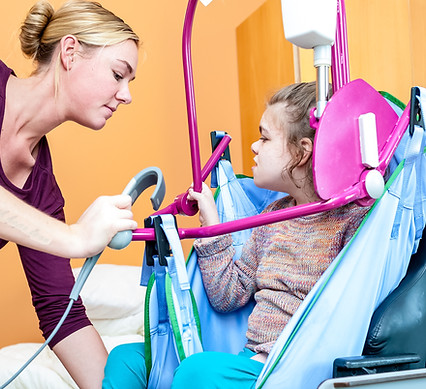
We provide individual manual handling assessments and interventions for NDIS participants with complex mobility or positioning needs. Our focus is keeping clients and carers safe while supporting comfort and independence.
Safe Transfers and Mobility
Our team assists with safe transfers and mobility using appropriate equipment, including:
-
Slide sheets
-
Transfer boards
-
Standing hoists
-
Full hoists
-
Rollators and walking aids
We support bed, chair, toilet and shower transfers, as well as repositioning and short-distance mobility.
Trained by Registered Nurses
All staff receive foundational manual handling training. During your first shifts, our Registered Nurses provide:
-
Training in your specific preferences
-
Education on your specialised equipment
-
Practical guidance on safe techniques tailored to you
This ensures your support team follows your manual handling plan safely and consistently.
Manual Handling
Challenging Behaviors, PBSP, BSP and Restrictive Practices
Feels Like Home Support Services has extensive training, knowledge, and experience supporting individuals who display challenging behaviours (behaviours of concern). Our team is skilled in implementing Positive Behaviour Support (PBS) plans and supporting the safe use of regulated restrictive practices in line with NDIS requirements.
We work closely with NDIS Behaviour Support Practitioners and always aim to use the least restrictive and most person-centred strategies possible. Our focus is on safety, dignity, and helping participants build skills and independence.
What Are Challenging Behaviours (Behaviours of Concern)?
Challenging behaviours, also known as behaviours of concern, look different for every individual. Common categories of behaviours of concern can include:
-
Disruptive behaviours
-
Aggression
-
Self-harm
-
Sexualised behaviours
-
Bullying
-
Withdrawal or social isolation
When these behaviours are identified, we can help coordinate a referral and begin discussions about involving a specialist NDIS Behaviour Support Practitioner.
Depending on factors such as the type, frequency, and severity of the behaviour, the Behaviour Support Practitioner may recommend a Positive Behaviour Support Plan (PBSP) or a Behaviour Support Plan (BSP) in collaboration with the participant and their family or carers.
What Is a Behaviour Support Plan (BSP)?
A Behaviour Support Plan (BSP) is a structured, person-centred plan that outlines:
-
Participant-specific strategies and interventions
-
Early warning signs and triggers
-
Proactive and reactive support strategies
-
Skill-building and communication strategies
-
Any regulated restrictive practices (if required and approved)
BSPs are usually developed by a Behaviour Support Practitioner in partnership with the participant, their family, carers, and other professionals such as counsellors or psychologists.
The goal of a BSP is to:
-
Reduce behaviours of concern
-
Increase safety and quality of life
-
Support the participant to develop new, more adaptive and functional skills
-
Promote independence, choice, and control
NDIS Behaviour Support & Restrictive Practices – Helpful Links
For more detailed information from the NDIS about behaviour support and restrictive practices, you can visit:
1. Understanding behaviour support and restrictive practices